Ask ten kitchens in Bari how they cook spaghetti all’assassina and you may get ten different answers — all delivered with complete conviction.
When we interviewed him, Pierino Lonigro of Al Sorso Preferito confirmed that their spaghetti is pre-cooked for a few minutes, purely for speed of service. Yet at Bari’s Urban Assassineria, toasting the raw spaghetti is essential. According to co-founder and chef Celso Laforgia, starting with raw pasta is more complex, but it allows total control over the texture of the dish.
There’s also a second debate over whether the spaghetti should be left alone to cook almost entirely in the passata, or fed broth a ladle at a time, risotto-style.
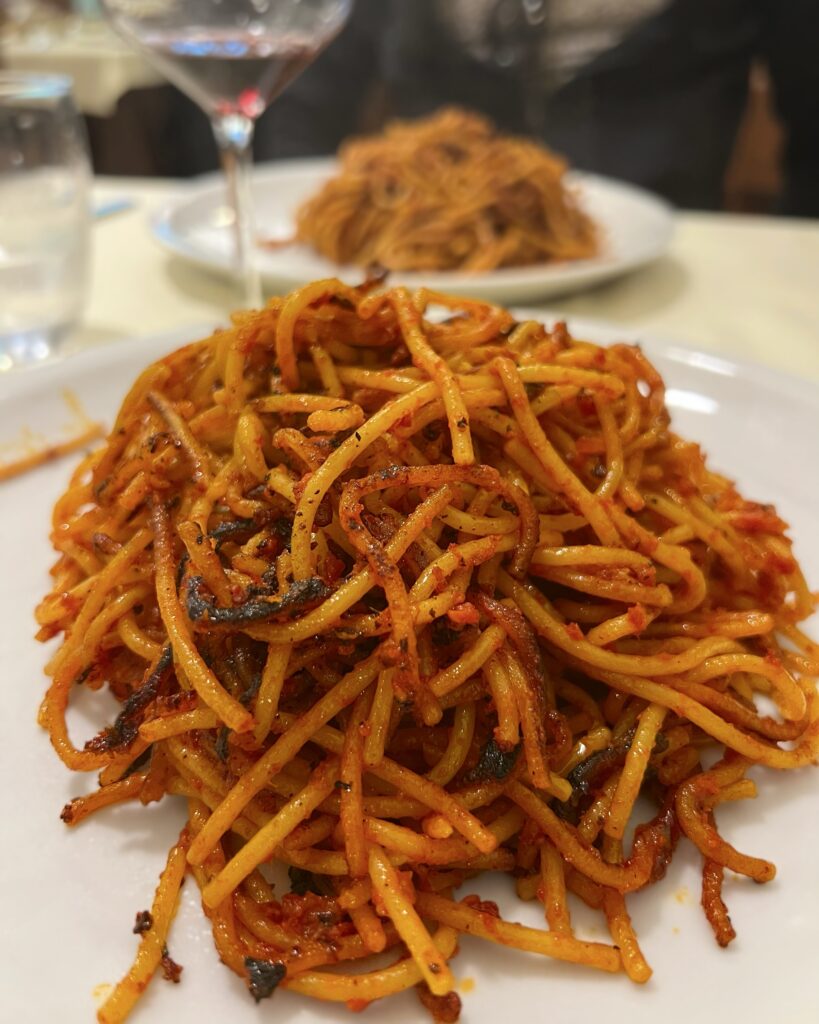
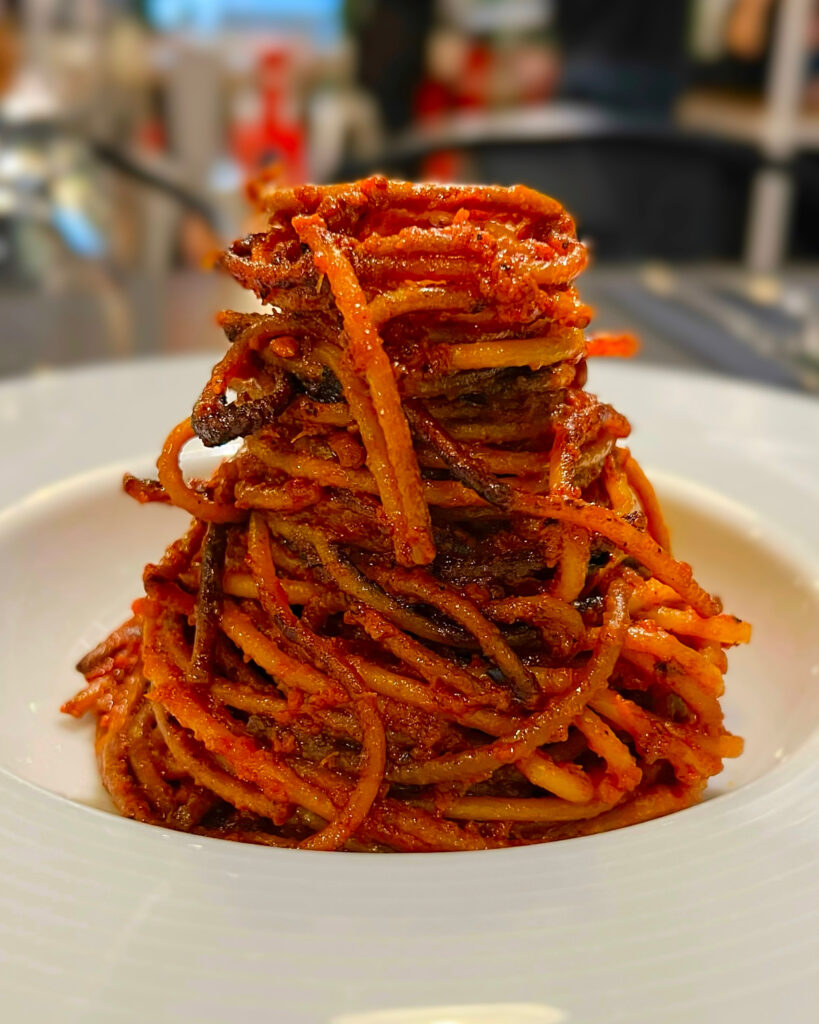
Our approach to spaghetti all’assassina
The Accademia dell’Assassina are purists about both ingredients and method. At the International Assassina Accademia, we’re more relaxed on ingredients — but just as particular about method, since it’s the crunchy smokiness that makes spaghetti all’assassina what it is.
We’ve tried and tested more versions than we’d like to admit. What you’re always chasing is a balance of texture and taste.
The spaghetti should be soft and chewy, with an almost translucent quality, but still crisp and crunchy around the edges. The flavour needs to be charred and smoky, deep and tangy, but without burning the tomato passata so that it becomes bitter. The pasta should be coated in caramelised tomato, but should not be drowning in sauce.
Here’s where we’ve landed on the details that matter most:
The pan
Traditionally, spaghetti all’assassina is cooked in a thin black iron pan called a sartàscene, placed over a very high flame. However, this pan is no longer standard in most kitchens — and can be difficult to find.
Many chefs now use a thicker iron lionese pan. At the International Assassina Accademia, we use a large non-stick aluminium pan, large enough for the spaghetti to lie flat and cook evenly.
The pasta
Recipes often advise against using bronze-cut spaghetti because it can release too much starch for this recipe. We find the difference negligible in practice — just use a good-quality spaghetti.
You can use other long pasta shapes, such as bucatini or linguine, but it must be a shape that can lie flat or distribute evenly in the pan to achieve the signature charred, crispy crust.
We advise against using short shapes such as fusilli. In Bari, you might find orecchiette all’assassina, but typically the pasta is pre-cooked, with an assassina sauce added to finish the cooking process.
Use dried, not fresh, spaghetti. Second-day spaghetti is best left for a frittata.
The chilli heat
Spaghetti all’assassina isn’t as fiery as the name might suggest. Traditional Puglian cuisine uses chilli for flavour rather than intense heat. While locals might find one or two red chillies punchy, visitors used to hotter cuisines may find it relatively mild.
For more kick, try using at least three dried chillies, or add Calabrian ’nduja for a deeper heat — just note that this makes the dish unsuitable for vegetarians.
Fresh chillies work too, especially if you have a homegrown supply.
Into the frying pan
We start by toasting and blistering our spaghetti in the oil, garlic and chilli, before adding the passata. We find this adds a nuttier flavour and helps give the pasta its unique texture — an ultra al dente bite. It also helps achieve the smokiness and charred texture the dish is built on.
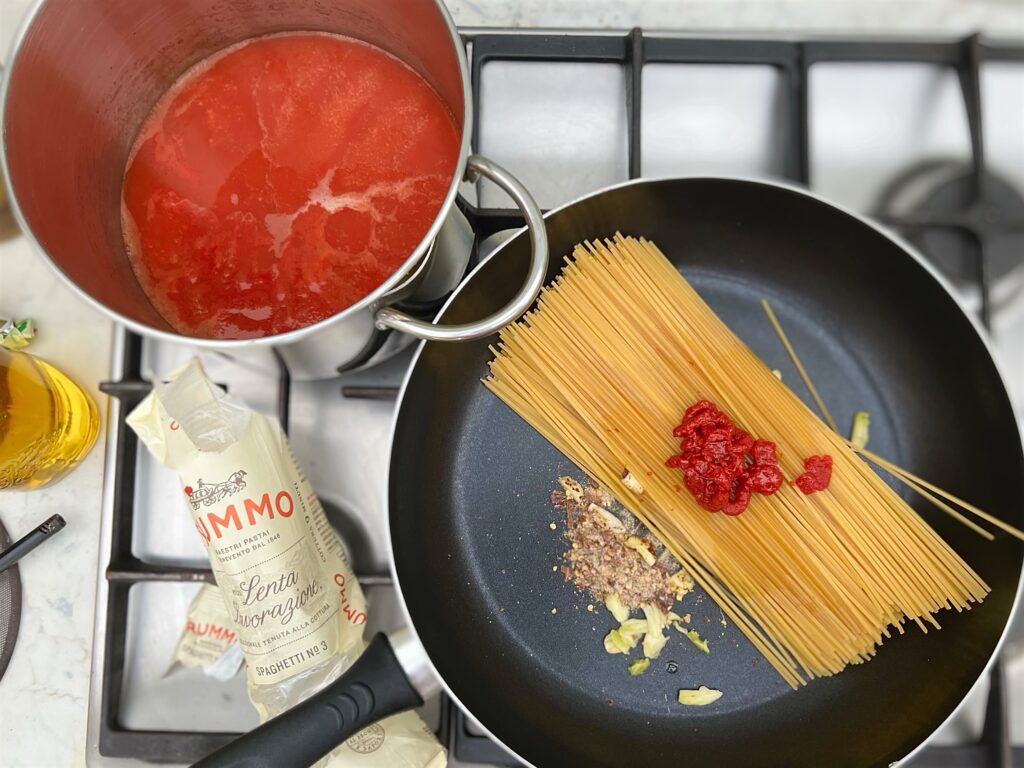
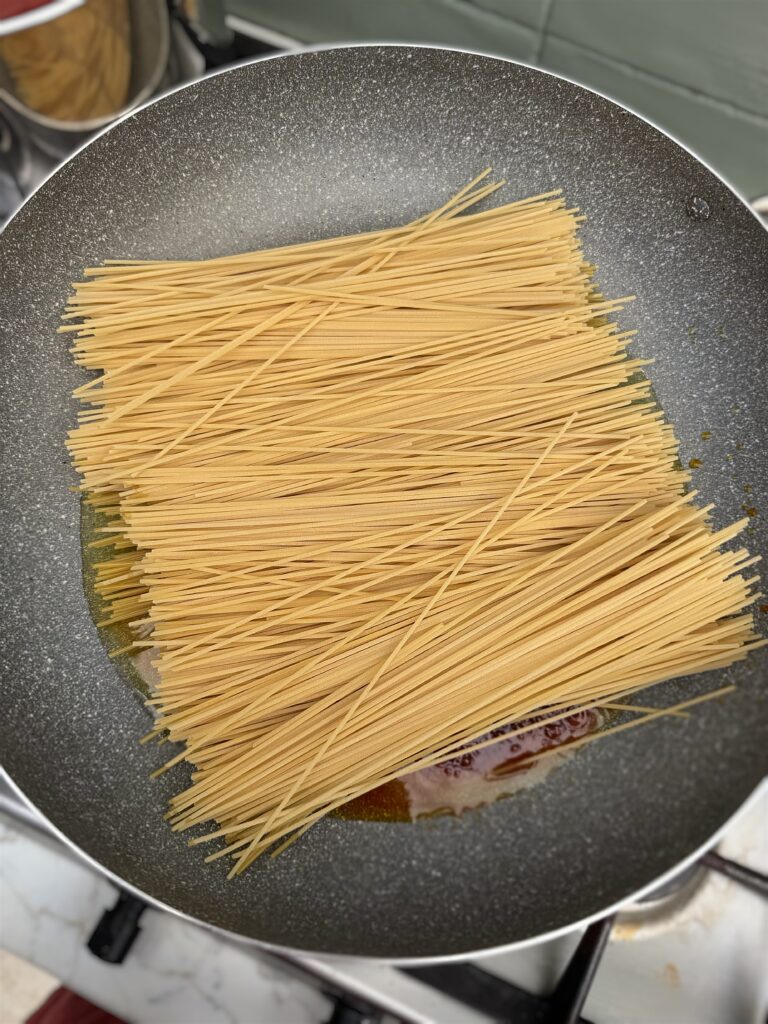
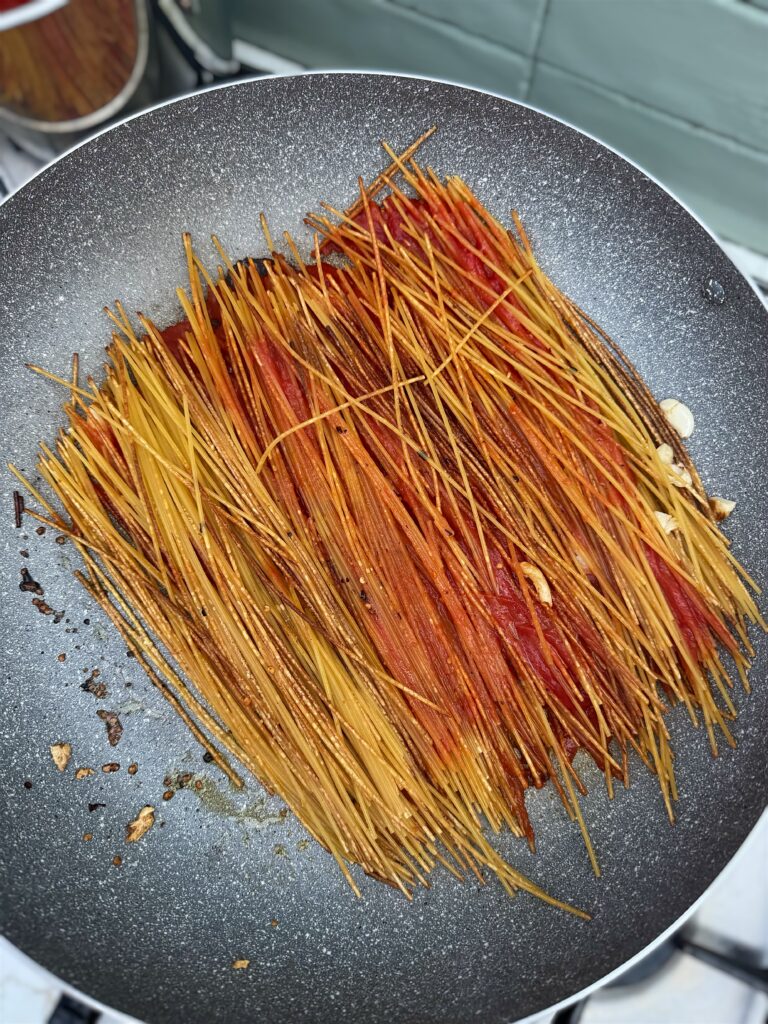
To risottata or not to risottata?
Should you let the spaghetti cook entirely in the sauce, letting the sauce catch and blister, or do you cook it like risotto, adding the tomato broth ladle by ladle?
We take a middle ground. Just as toasting the spaghetti first allows us more control over the intended texture of the dish, we prefer to add the passata, let it caramelise, and then continue cooking it risottata style. This allows us more control over the sauce (the end result should not be spaghetti swimming in sauce), and it better avoids the passata burning and turning bitter.
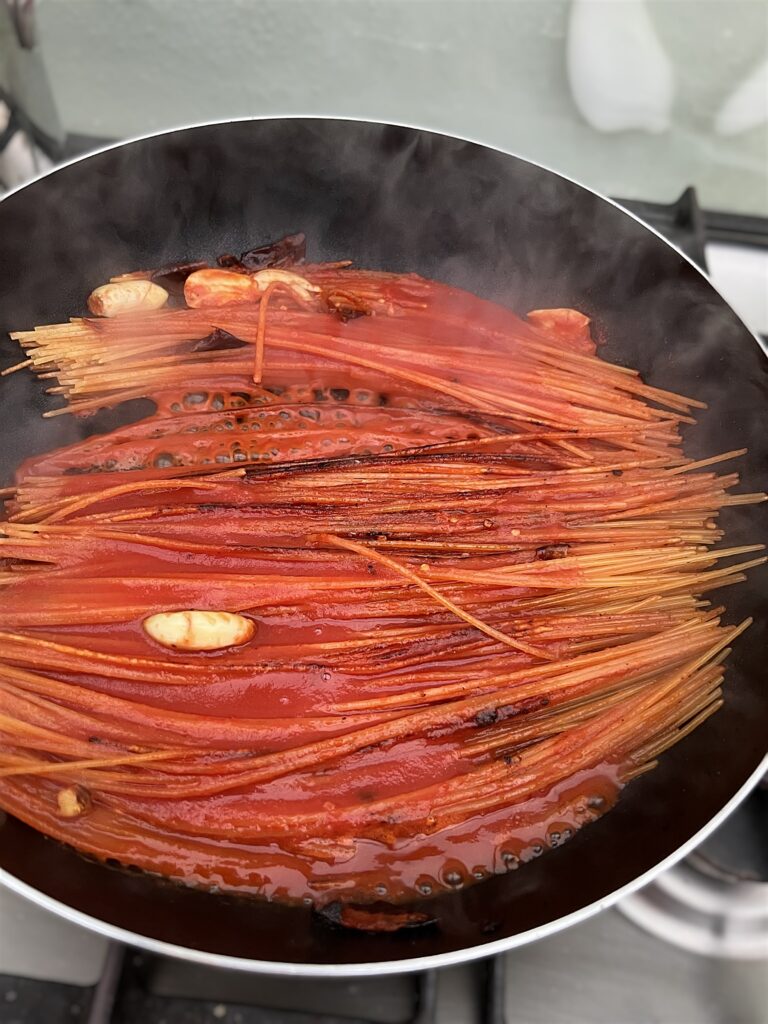
Spaghetti all’Assassina — The Accademia Classic
Serves 4
This is the Accademia dell’Assassina’s own version, from Bari. The dried spaghetti isn’t cooked in boiling water like ordinary pasta — that’s done entirely in the pan, fed broth a ladle at a time, until it scorches, curls and turns “calloused” at the edges. Have no pity on it. That’s the whole point.
You will need
Ingredients
| Metric | US alternate | |
|---|---|---|
| 400 g spaghetti | 14 oz (¾ lb) | |
| 150 g tomato passata | ⅔ cup | |
| 1 tube tomato concentrate | 1 small tube tomato paste (about 4½ oz) | |
| 150 g extra virgin olive oil | ⅔ cup | |
| 3 cloves garlic | 3 cloves, green centre removed | |
| 2 whole chillies + a little more, chopped | to taste, “an abundance” | |
| Salt | to taste | |
| A pinch of sugar | to correct acidity, if needed |
Equipment
- A well-seasoned black iron pan — the Accademia insists on one from Traversa Fratelli in Bari Vecchia, though the shop is “temporarily” closed indefinitely, so any well-seasoned iron pan will have to do
- A wooden spatula, of no particular origin
- A separate pan for the broth
Method
1. Make the broth.
In a separate pan, bring plenty of water to the boil with the tomato concentrate and a pinch of salt. It should turn bright red, and taste of it too. Keep it at a gentle simmer nearby.
2. Build the base.
Pour the oil into your seasoned iron pan over a lively flame. Add the garlic and an abundance of chilli, and brown gently. Pour in the passata and spread it across the base of the pan with a wooden spoon. It will spit and splutter — this is normal, and the Assassina is worth it. Taste, and add a pinch of sugar if the tomato needs rounding out.
3. Add the pasta — raw, straight into the pan.
No boiling water for this dish. Tip the raw spaghetti directly into the pan and begin turning it with the wooden spatula, letting the strands catch and stick a little to the base before lifting them.
4. Feed it broth, one ladle at a time.
Pour in a medium ladle of hot broth. Let it come to a simmer and be absorbed without stirring. When you hear it sizzle again, lift the stuck spaghetti with the spatula and turn it, bringing the scorched strands up and sending the less-cooked ones down. Repeat, ladle by ladle — like a risotto, but with patience between additions rather than constant stirring. Listen for the sizzle each time; that’s your cue.
5. Let it burn — a little.
After 8–9 minutes of this treatment, the spaghetti will soften and curl in on itself, and the colour will turn toward red-brown with genuinely burnt bits clinging to the pan. Taste it. It won’t have the texture of pasta cooked in water, and it shouldn’t — it should be more “calloused,” firmer against the teeth, with only the scorched strands giving a real crack. How far you take the char is your judgement to make.
6. Serve straight from the pan.
When it looks right to you, it’s ready. Bring the pan to the table and serve directly from it.
Notes from our Puglia Kitchen: the Accademia use the “have no pity” / “punishment” language — it’s useful here as a reminder to first time chefs and home cooks that you should have no fear about “killing” the spaghetti. The dish can take it. But there is a balance between scorching the dried pasta and burning the tomato sauce bitter, which does need to be avoided. That’s why in our version, just like those cooked in the trattorie ands osterie of Bari Vecchia, we prefer to toast the spaghetti first, before adding the passata.
We use a non-stick pan — even in Bari it’s impossible to get the Accademia prescribed pan! The key is that it should be big enough to take the full length of the spaghetti. If not, manage as best you can until the spaghetti becomes sufficiently flexible to curl around the pan.
Spaghetti all’Assassina — The Puglia Guys Version
Serves 4, generously
We char and blister the spaghetti before any passata or broth goes in — a few minutes in the oil, chilli and garlic first, for a smokier result.
Once the pasta has developed some colour and flavour, we add the tomato and continue cooking it risotto style, until it reaches the right balance of softness and crunch. It also makes it easier to end up with a caramelised sauce, rather than a bitter one!
A few things we do differently: we crush the garlic rather than chop it, which stops it turning bitter if it catches and lets it melt into the sauce instead. And more recently, we’ve taken to swapping dried chilli for Calabrian ‘nduja, which brings its own dimension.
Pronti, partenza, cucina!
You will need
Ingredients
| Metric | US alternate |
|---|---|
| 500 g spaghetti | 1 lb (a full packet) |
| 150 g tomato passata | ⅔ cup |
| 1 tube tomato concentrate | 1 small tube tomato paste (about 4½ oz) |
| Extra virgin olive oil | a generous glug, plus more to finish |
| Garlic — 3 large cloves, crushed | 3 large cloves, crushed |
| Chilli — 3 dried, ground, or 15 g ‘nduja | 3 dried, ground, or ½ oz ‘nduja |
| Salt | to taste (season the broth, not the pasta) |
| Sugar (optional) | a pinch, if the sauce turns bitter |
A note on ‘nduja: it’s a spreadable Calabrian salume made from pork, lard, herbs and Calabrian chilli, so this version isn’t vegetarian. Swap in fresh chopped chilli if you have a glut, as we do in summer.
Method
1. Make the broth.
Bring 1 litre (about 4¼ cups) of water to the boil with the tomato concentrate, reserving a couple of squeezes for the pan. Season it well — this is where the salt goes, not on the pasta. It should be bright red and tasty, but still a broth.
2. Build the base.
Pour a generous glug of olive oil into the pan. Add the crushed garlic and chilli (or the ‘nduja, if using) over high heat until the garlic sizzles — but pull back before it browns and turns bitter.
3. Char the spaghetti first — dry, no sauce yet.
Lay the raw spaghetti in the pan in an even layer and squeeze the reserved tomato concentrate over the top. Now the first step is to step back. Let it blister and blacken slightly before flipping to do the same on the other side. Listen for the sizzle, and let the smell tell you when it’s ready — smoky, not burnt.
4. Add the passata.
Once both sides have caught, pour in the passata, with a pinch of sugar if you’re worried about bitterness. Let it simmer without touching the spaghetti. When the sizzle changes pitch, wait — the sauce needs 30 seconds to a minute to start catching on the base. Once it does, give it another 30 seconds to a minute, then flip the spaghetti and let it catch again.
5. Feed it broth, ladle by ladle.
The pasta can now be stirred a little, though it should still feel stiff. Add two ladles of broth, then stand back again — let it reduce, listen for the sizzle to change, and wait it out. Repeat, stirring to lift any burnt spaghetti from the base as you add more broth each time. The spaghetti needs to be killed a little at each stage: caught, burnt, softened. It won’t swell the way boiled pasta does, but it should reach a proper al dente — around 15 minutes from the first ladle of broth. A splash more olive oil helps it along if it needs it.
6. Serve it hot and fiery.
Straight from the pan, with a final drizzle of olive oil for extra pepperiness.
A word on garnishes
We stay close to the traditional method, and we think too many toppings pull you away from what makes assassina special — its taste and, above all, its texture. That said, a few earn their place. In Bari Vecchia it’s often served with a spoonful of stracciatella; less about taming the chilli (most restaurant versions are only mildly spicy) than Bari’s current habit of putting stracciatella on everything. Still, the creaminess works well against the dry, sauce-absorbed spaghetti. Our own favourite is smoked burrata, which echoes the dish’s charred edges.
Most recently, we’ve tried something from our own Puglia Kitchen garden: fichi d’India sott’olio topped with a fichi d’India and ‘nduja pesto pangrattato, both made from prickly pear cactus paddles we grow ourselves. It worked brilliantly.
The Assassina Method Debate: Raw or Blanched, Risotto-Style or Not
Genuine debate still surrounds the “correct” way to cook spaghetti all’assassina — starting with the chef who invented it in the first place.
Two questions divide cooks: should the spaghetti go into the pan raw or be blanched first? And should it be cooked risottata from start to finish, or seared first and then cooked in the sauce?
Raw or blanched spaghetti?
The Accademia’s version calls for raw spaghetti to go directly into hot oil, garlic and chilli. There is no pre-cooking. Tomato broth is then added gradually as the pasta cooks in the pan.
This is the purist approach: the spaghetti goes from dry to al dente in a single pan, developing its characteristic uneven char and crisp edges along the way.
But the story of the dish’s inventor tells us something different.
In an interview with chef Enzo Francavilla, who created spaghetti all’assassina at Al Sorso Preferito in 1967, he described briefly blanching the spaghetti before adding it to the iron pan. The pasta was then cooked with tomato and chilli until it developed its characteristic crust.
I burnt the garlic in an iron pan with oil and chilli – not just browned, but burnt – and then removed it.
Into the boiling oil, I poured raw, hand-crushed peeled tomatoes, causing a flare-up. That flare-up was the ‘joy of the kitchen,’ which I immediately covered with a lid. The resulting smoke remained inside, imparting a smoky flavour to the spaghetti, as if they were burnt, but they were actually roasted.
Meanwhile, I brought water and salt to the boil and cooked the spaghetti (actually vermicelli) until just before al dente, when they began to bend. I drained them well and added them to the pan with the tomato to absorb the flavours. I stirred continuously, adding more raw, crushed tomatoes if they became too dry, and continued cooking until the pasta was done and the tomato had thickened. I tasted them to check the cooking, flavour, and salt, then gave them a superficial toasting. I finished by adding a little oil to give them a sheen, and my recipe was complete.
From Sandro Romano’s interview with Enzo Francavilla.
That is a significant detail. The dish’s inventor was not describing the raw-spaghetti / ‘risottatura’ techniques now considered essential by the Accademia dell’Assassina.
Assassina | the risottatura “error”
In the classic risottatura method, raw spaghetti goes into the pan and tomato broth is added gradually, ladle by ladle. The pasta cooks and browns at the same time, with the liquid absorbed before more is added. This continues until the spaghetti is al dente and the surface has developed its characteristic char.
Other recipes separate the two stages. The spaghetti is first cooked in a spicy tomato sauce until al dente and the sauce has reduced. It is then exposed to high heat and fried in the pan until the edges become golden, crisp and charred.
So, which is the authentic method?
There isn’t a simple answer.
The raw-spaghetti, full-risottatura method is the version most closely associated with the modern Accademia and its codification of the dish. But the blanch-first method has a direct connection to Enzo Francavilla’s own account of how he cooked his invention.
That doesn’t necessarily make one method right and the other wrong. Spaghetti all’assassina was created through improvisation, ingenuity and the practical limitations of a working kitchen. It was not born from a written recipe.
What matters is the result: spaghetti that is cooked through but retains bite, coated in concentrated tomato, with crisp, smoky, caramelised edges. The challenge is getting enough char to give the dish its distinctive character without burning the tomato or drying out the pasta.
For us, understanding the traditional method matters. But so does understanding why cooks have adapted it. There is more than one route to a good assassina — and the debate over which is the “authentic” one is now part of the dish’s story.